Why Do Clear Phone Cases Turn Yellow? 9 Real Causes, Prevention Tips & What Actually Works
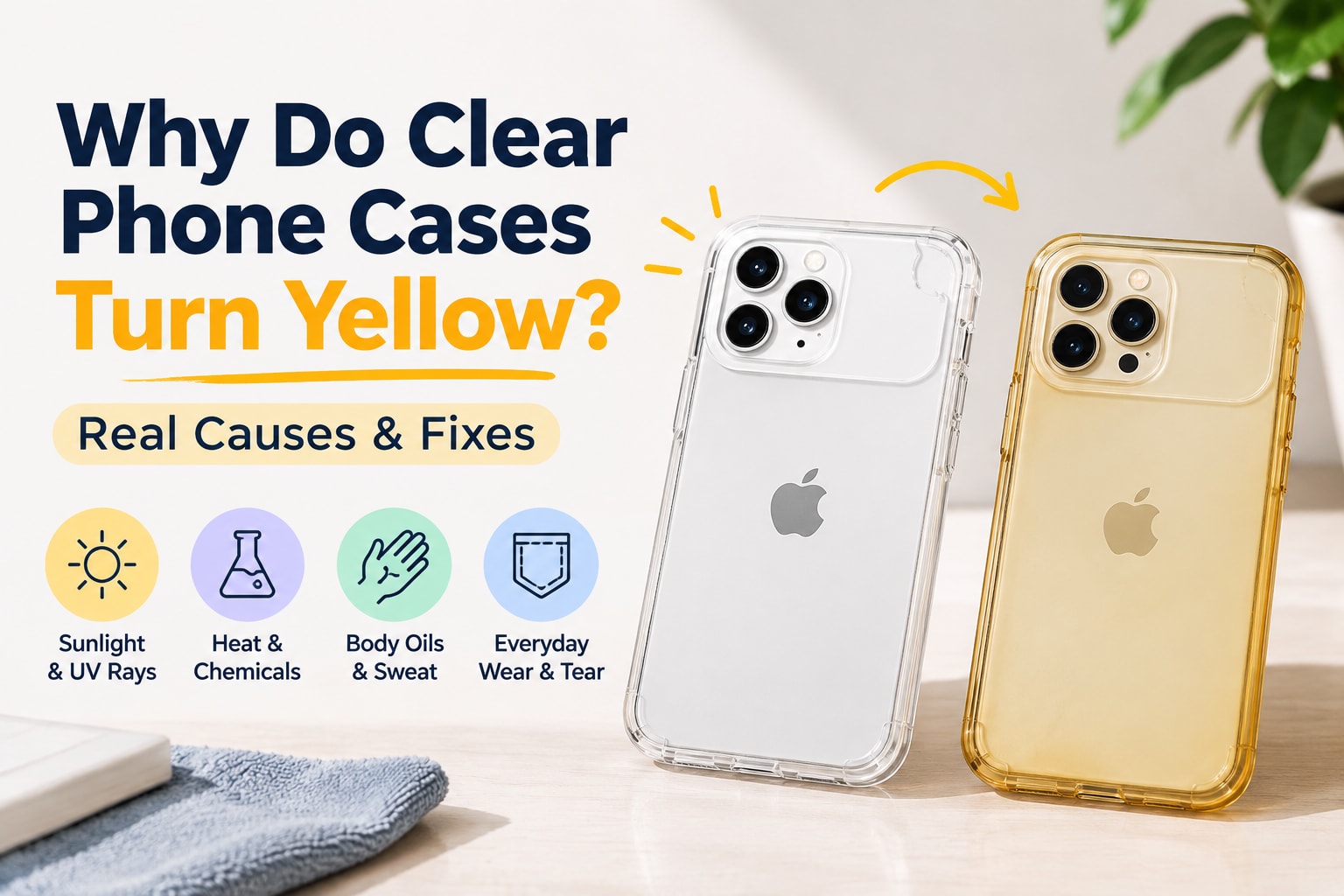
A clear phone case turns yellow because the plastic it's made from slowly reacts with light, heat, and oxygen, and that reaction changes how the material absorbs light. That's the short version. The more useful version is that not every case that looks yellow is actually experiencing that reaction.
Some cases are simply coated in a thin film of skin oil, dust, and everyday grime that happens to catch the light and read as yellow. Others have genuinely changed at a material level, and scrubbing won't bring the original clarity back. A few aren't discoloured at all; they're just worn out, with cracked corners or stretched edges.
This guide separates those situations clearly: dirty, discoloured, and damaged. You'll learn the real causes, how to tell what's happening to yours, whether it can be fixed, what genuinely slows the process down, and what to look for next time you buy.
Why Do Clear Phone Cases Turn Yellow?
Clear phone cases turn yellow because the polymers they're made from slowly oxidize under UV light and heat, and that chemical change alters how the plastic absorbs and reflects light.
Plastics like TPU and polycarbonate are long molecular chains held in a specific arrangement, and the UV portion of sunlight carries enough energy to break some of those chemical bonds. Repeated over weeks, this produces byproducts that absorb light differently than the original plastic, typically more blue light, which reads as yellow rather than grey. Heat speeds the process up, since chemical reactions generally move faster at higher temperatures, and oxygen in ordinary air is what the reaction needs in the first place. Material scientists call this photo-oxidative degradation: light-driven ageing that requires oxygen. It's gradual, which is why a case can look fine for months and then seem to shift color all at once.
9 Real Reasons Your Clear Phone Case May Be Turning Yellow
1. UV exposure and sunlight. The biggest single driver: a case left near a sunny window or car dashboard absorbs UV energy that breaks down the polymer right where discolouration first appears.
2. Heat. Heat doesn't cause yellowing alone, but it accelerates it. A case that regularly runs warm ages faster than one kept at room temperature.
3. Material composition. Softer polymers like TPU tend to yellow sooner than rigid polycarbonate, and formulation and UV-stabilizing additives matter as much as the base material name.
4. Skin oils and sweat. Hand oil settles into a case's surface texture, which can look like a hazy film and, over time, interact with the plastic itself.
5. Dirt and everyday grime. Pocket lint and grime build up the same way the most common reason a case looks yellow within weeks, and the easiest issue to actually fix.
6. Harsh or unsuitable cleaning products. Bleach and alcohol-heavy cleaners can react with certain plastics, sometimes leaving cloudiness that looks like new discolouration.
7. Cosmetics, lotions, and other substances. Sunscreen and hand lotion contain oils and chemical filters that can transfer onto a case with repeated contact.
8. Age and repeated use. No single dramatic event is needed; it's the slow accumulation of ordinary exposure over months.
9. Case construction and design. Clear backs, tinted edges, and hybrid builds age unevenly; a rigid back and a separate TPU frame can discolour at different rates.
No clear case is immune to all nine; formulation, exposure, and handling interact differently for every user.
Is Your Clear Phone Case Actually Yellow, or Is It Just Dirty?
Before you decide your case is "yellowing," check whether it's actually dirty, genuinely discoloured, or simply damaged; the fix is different for each.
|
What you notice |
What it may indicate |
What to try |
|
Yellow tint across the whole case, gradual over months |
Discolouration (material ageing) |
Cleaning may help slightly; full clarity likely won't return |
|
Tint at the edges or grip points only |
Dirty (oil, sweat, grime) |
Gentle cleaning usually helps noticeably |
|
Sticky or tacky surface |
Dirty (oil, lotion, residue) |
Clean with a mild, material-safe method |
|
Discolouration unchanged after cleaning |
Discolouration (material change) |
Not reversible; consider replacement if it bothers you |
|
Cloudiness rather than yellow tone |
Dirt, residue, or early oxidation |
Clean first, then reassess |
|
Cracking, stretching, or a loose fit |
Damaged |
Cleaning won't help; replace for protection |
The simplest test: clean the case properly, let it dry, then look again. If the colour lifts, it was mostly dirt. If it looks the same, the material itself has changed.
Can You Make a Yellow Phone Case Clear Again?
It depends on whether the yellow is dirt or discolouration. If it's dirt, cleaning can meaningfully improve the case's appearance. If the plastic itself has changed at a molecular level, cleaning generally can't restore the original clarity, since the colour shift comes from within the material, not on top of it.
If the case is cracked, brittle, or no longer fits snugly, that's a different issue; protection is the concern now, and replacement is the more sensible move.
Plenty of viral "hacks" claim to reverse yellowing completely: peroxide soaks, baking soda scrubs, or sun-bleaching. Some lighten surface dirt. None reliably reverse genuine material discolouration, and abrasive scrubbing or strong peroxide soaks can weaken the case further. Try a gentle clean before assuming the worst, but don't expect a miracle from a case that's genuinely aged.
How to Clean a Clear Phone Case Safely
-
Remove the case from your phone so moisture doesn't get into the ports or buttons.
-
Inspect the discolouration: uniform, edge-concentrated, or paired with cracking to set expectations.
-
Use a mild method suited to the material. Lukewarm water with a little gentle dish soap works for most TPU and polycarbonate; skip bleach, undiluted alcohol, or abrasive powders.
-
Clean gently with a soft brush or cloth, like an old toothbrush, to reach texture without scratching.
-
Rinse thoroughly; leftover soap residue attracts dust and looks hazy again fast.
-
Dry completely on a towel before reattaching; trapped moisture against your phone isn't worth it.
-
Reassess in good light. If the tint is unchanged, you're looking at discolouration, not dirt.
Cleaning restores a case that's genuinely dirty. It can't undo a chemical change in the plastic itself.
Does Wireless Charging Make Clear Phone Cases Turn Yellow?
Not by itself. Wireless charging does generate some heat, and heat is one of the factors that can accelerate yellowing over time, but wireless charging isn't a unique or primary cause on its own.
Apple's own guidance notes that the iPhone manages temperature automatically during charging, including wireless charging, and recommends removing a case if your iPhone tends to heat up while charging. That's a reasonable habit either way. Realistically, charging heat is one input among several; sunlight, ambient temperature, and material generally matter more over a case's life than charging habits alone.
Which Clear Phone Case Materials Are Less Likely to Yellow?
|
Material |
Flexibility |
Clarity |
Yellowing considerations |
Typical characteristics |
|
TPU |
High, shock-absorbing |
Good when new, can haze |
Yellows sooner than rigid plastics |
Comfortable grip, common in budget/mid-range cases |
|
Silicone |
High, soft |
Often not fully transparent |
Less prone to strong yellow tint, attracts more surface dust |
Soft-touch feel, less rigid protection |
|
Polycarbonate (PC) |
Low, rigid |
Excellent clarity |
More yellow-resistant than TPU, not immune |
Scratch-resistant, holds clarity longer |
|
Hybrid (PC back + TPU frame) |
Mixed |
Very good on rigid panel |
Materials age at different rates; edges may discolour first |
Combines PC clarity with TPU cushioning |
No material is permanently non-yellowing; formulation, UV stabilisers, and actual use affect performance as much as the material name does.
Do Anti-Yellowing Phone Cases Really Work?
"Anti-yellowing" doesn't mean a case stays perfectly clear forever; it means the manufacturer has taken steps to slow the process. That can involve UV-resistant additives, protective coatings, adjusted formulations, or a slightly tinted or frosted finish that hides early yellowing.
These approaches genuinely extend how long a case looks fresh. What they can't do is eliminate photo-oxidation entirely, since that reaction is a property of the plastic itself. Treat "yellowing-resistant" as a useful, accurate claim and treat "will never yellow" with scepticism.
How to Slow Down Clear Phone Case Yellowing
Do:
-
Reduce unnecessary UV exposure, like leaving your phone face-up in direct sun.
-
Keep the case reasonably clean with regular gentle wipes.
-
Avoid extreme heat hot cars especially.
-
Remove oils and residue regularly, especially with frequent hand cream or sunscreen use.
-
Follow cleaning methods suited to the case's material.
Avoid:
-
Leaving your phone on a hot dashboard or windowsill.
-
Reaching for bleach or strong solvents "just to be sure."
-
Assuming every yellow mark is permanent before you've tried cleaning it.
-
Expecting any clear case, however marketed, to look identical a year or two later.
None of this stops yellowing outright it slows how quickly it becomes noticeable.
How Long Does a Clear Phone Case Last?
There's no single honest number, because longevity depends on material, construction, how much sun and heat the case sees, cleaning habits, and ordinary wear. A case kept mostly indoors can look presentable far longer than an identical one that lives in a sunny car console.
When should you replace a clear phone case? Watch for signs beyond colour:
-
Visible cracks, especially near corners or the camera cutout
-
A loose fit that no longer holds the phone securely
-
Stretched or warped edges
-
Brittle plastic that feels ready to snap
-
Broken or unresponsive button covers
-
Camera interference from a warped edge
-
Discoloration severe enough to bother you, even if the case is otherwise intact
If you're weighing this decision, our guide on when you should replace your phone cover goes deeper into the specific wear signs worth watching for.
How to Choose a Clear Phone Case That Ages Better
A few buying choices make a real difference in how a case looks a year from now:
-
Material: rigid polycarbonate panels generally hold clarity longer than all-TPU builds; hybrid designs offer a middle ground.
-
Construction: look for UV-resistant or anti-yellowing formulations rather than generic "clear TPU."
-
Edge and camera protection: raised edges and a proper camera lip reduce the scuffing that makes discolouration more noticeable.
-
Button coverage: well-fitted button covers age better than thin, stretched material over high-use areas.
-
Finish: a light frosted or tinted finish hides early yellowing far better than a fully crystal-clear back.
-
Manufacturer claims: specific language like "UV-stabilized" means more than a vague "won't yellow" promise.
If you'd rather browse than build a checklist, LuminaKartt's page is organised around these same considerations.
Clear vs Frosted vs Tinted vs Opaque Phone Cases
|
Style |
Visibility of phone |
Fingerprint visibility |
How yellowing appears |
Maintenance |
|
Crystal clear |
Full |
High |
Very noticeable against full transparency |
Needs regular cleaning to look its best |
|
Frosted |
Softened, translucent |
Low |
Less noticeable; matte finish diffuses shifts |
Easier to maintain visually |
|
Tinted |
Partial, colour-shifted |
Moderate |
Blends into the existing tint |
Moderate |
|
Opaque |
None |
Low to none |
Not visible on the surface |
Lowest maintenance for appearance |
If you like showing off your phone's original colour, clear is worth the extra upkeep. If you'd rather not think about yellowing, frosted or tinted options offer a similar look with less visible ageing.
Should You Keep Using a Yellow Phone Case?
Cosmetic yellowing alone doesn't mean a case has stopped protecting your phone. One that's discoloured but still fits snugly, covers the corners, and shows no cracking is still doing its job.
Replacement becomes sensible when the case shows actual structural issues: cracks, a loose fit, brittle plastic, or camera interference. Treat colour and function as separate questions: cosmetic ageing is a style decision, structural wear is a protection decision, and only one is urgent.
Frequently Asked Questions
Why do clear phone cases turn yellow?
The plastic slowly oxidises under UV light, heat, and oxygen, changing how it absorbs light. Sunlight, warmth, skin oils, and general ageing all contribute, and the shift happens gradually.
Why does my clear phone case turn yellow around the edges?
Edges see more handling, sunlight, and heat, and in hybrid cases they're often a different material than the back panel, so they discolour first.
Can a yellow phone case be cleaned back to clear?
Only if it's dirt or residue on the surface. Genuine material discolouration happens within the plastic and generally won't reverse with cleaning.
Does sunlight make clear phone cases yellow faster?
Yes. UV light is the biggest driver of yellowing, with enough energy to break down the plastic's structure over repeated exposure. Cases kept out of direct sun hold clarity longer.
Does charging make clear phone cases yellow?
Not on its own. Wireless charging can generate heat, which can accelerate yellowing, but it's a minor factor next to sunlight and material.
Which phone case material is least likely to yellow?
Rigid polycarbonate generally resists yellowing longer than soft TPU, though formulation and UV additives matter too; no material stays clear indefinitely.
How can I slow down clear phone case yellowing?
Keep the case out of prolonged sun and extreme heat, clean it gently and regularly, and skip harsh chemical cleaners.
Is a yellow phone case still safe to use?
Cosmetic yellowing alone doesn't affect protection. A case is worth replacing when it shows cracks, a loose fit, or brittle plastic, not just discolouration.
Explore Premium Phone Covers
Aesthetic designs, MagSafe compatible, shockproof protection crafted for you.