Can a Bad Phone Cover Make Your iPhone Heat Up or Drain Battery Faster?
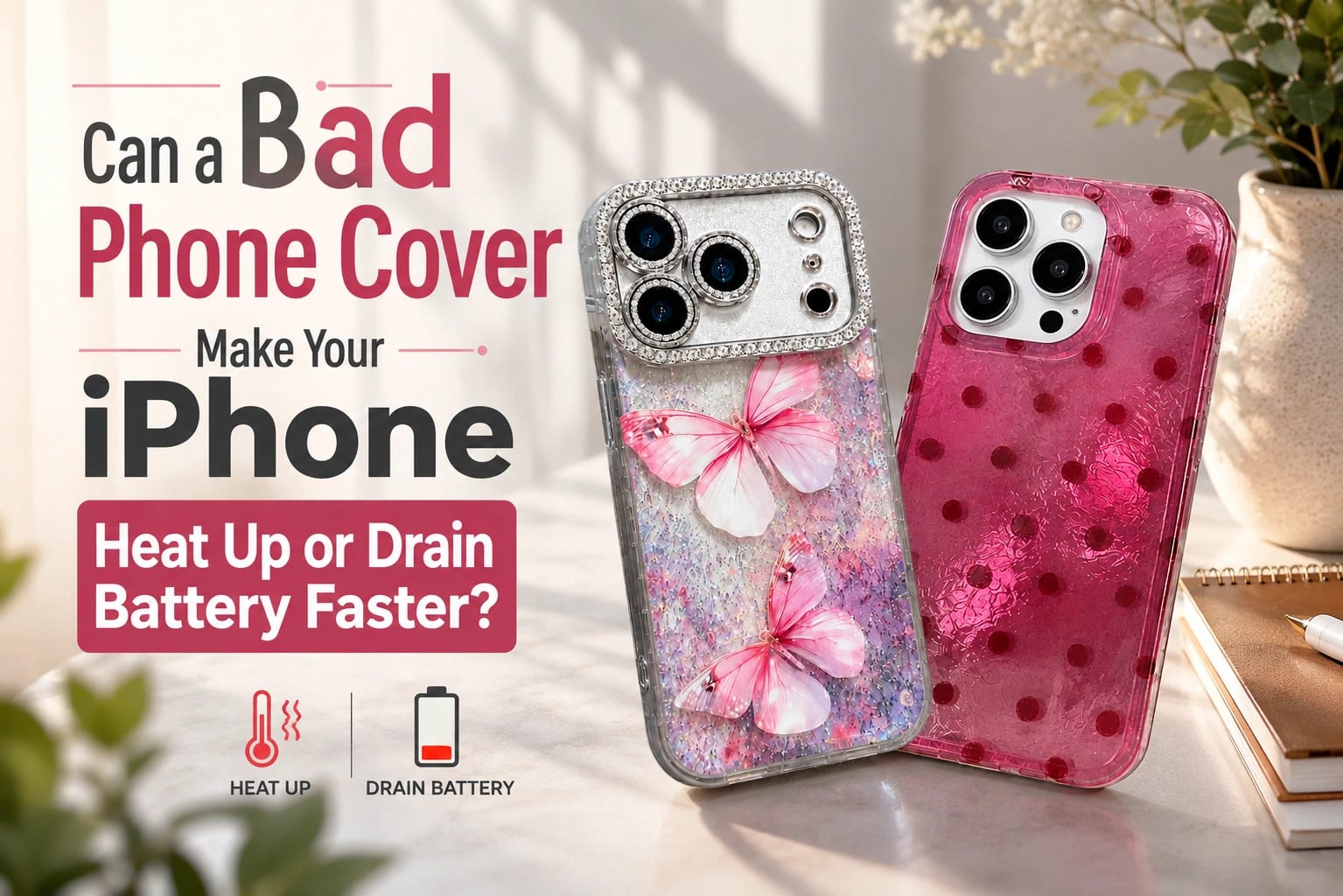
You plug your iPhone in before bed, and when you check on it later, it feels warmer than you expected under the cover. Maybe you were gaming with the charger still connected, or the phone spent the afternoon in a hot bag. Either way, the warmth catches your attention, and the case is usually the first thing that gets blamed.
That instinct makes sense: a cover sits directly against the phone, so it seems logical that it could be trapping heat inside. But the real explanation has more nuance to it. The cover itself isn't where the heat starts. What it can sometimes do is affect how quickly that heat gets away once it's already there, and that difference matters when you're trying to figure out what's actually going on.
Quick Answer: Can a Phone Cover Cause Your iPhone to Heat Up?
A phone cover doesn't generate heat on its own. The iPhone's own components its processor, battery, and charging circuitry produce heat while the phone is working. What a cover can do, in certain situations, is slow down how quickly that heat escapes, especially if the phone is already charging, running demanding apps, or sitting somewhere warm.
Two separate ideas are worth keeping apart here. Heat generation happens inside the phone; streaming video, using GPS, running the camera, or charging the battery all create warmth as a side effect of moving electricity and processing data. Heat dissipation is how that warmth leaves the device, usually into the surrounding air or whatever it's touching.
A cover sits right in the middle of that second step. Depending on its thickness, material, and fit, it can act as a mild insulator, which doesn't make it the cause of the heating, just one variable among several that decides how noticeable the warmth ends up feeling.
What Actually Makes an iPhone Heat Up?
Most of the warmth you feel from an iPhone comes from normal operation, not from any single accessory:
-
Wired or wireless charging, especially fast charging
-
Gaming or graphics-heavy apps
-
Recording video, particularly in 4K
-
Extended GPS or navigation use
-
Running several demanding apps at once
-
High screen brightness for long stretches
-
Weak cellular or Wi-Fi signal
-
Direct sunlight or a hot environment
Any one of these can raise the phone's temperature on its own. Combine two or three GPS apps running while charging in a hot car, and the warmth becomes much easier to notice.
Why Hot Weather Can Make It More Noticeable in India
Environmental temperature plays a bigger role than most people assume. When the surrounding air is already warm, the phone struggles to release its own heat, since there's less of a gap between the device and its surroundings.
This shows up often during Indian summers. Commuting outdoors, leaving a phone on a dashboard in direct sun, or charging it in a poorly ventilated room can all make normal warmth feel more intense not because of any single phone or cover, but because physics is working against a hotter backdrop.
Can a Thick Phone Case Trap Heat?
This is where case design starts to matter, though not in an all-or-nothing way.
Slim cases add a thin layer of material around the phone, so heat generally has a shorter path to escape.
Thick protective cases, built with drop protection in mind, add more material and often more layers. During demanding tasks, that extra bulk can make the phone feel warmer to the touch, since heat has to pass through more material before reaching the air outside.
Multi-layer protective cases, like rugged or heavy-duty options, are built primarily to absorb impact that's the main job- and it usually comes with a trade-off of added bulk.
None of this means a thick case causes overheating by itself. A phone doing light tasks texting, browsing, playing music usually stays comfortably cool regardless of case. Thickness only becomes a noticeable factor when the phone is already generating more heat than usual, such as during charging or gaming.
Which Phone Case Materials Handle Heat Better?
Material gets blamed a lot, but it's really just one piece of a bigger picture.
|
Case Type |
Heat Consideration |
Protection |
Typical Characteristics |
|
Thin TPU |
Generally lightweight |
Moderate |
Flexible and slim |
|
Silicone |
Depends on thickness and construction |
Moderate |
Soft and grippy |
|
Hard polycarbonate |
Generally lightweight |
Good |
Rigid structure |
|
Hybrid |
Varies by design |
Moderate to high |
Combines materials |
|
Very thick multi-layer |
May retain more warmth |
High |
Bulky and protective |
Material alone doesn't decide how warm a phone feels. Thickness, fit, and what the phone is doing at the time all matter too. A slim case in an unremarkable material can still perform well, while a poorly designed thick case can feel worse than a better one in the same category.
Can a Phone Case Make Your iPhone Battery Drain Faster?
A phone case doesn't use any battery power. It's a passive accessory with no electrical connection to the phone's internals, so simply wearing one can't drain your battery any faster.
What can affect your battery is heat, and that's where cases and battery life are actually connected, indirectly. iPhones run on lithium-ion batteries, which perform best within a moderate temperature range, and heat exposure over time is one of the recognised factors in long-term battery health. This isn't about one warm afternoon; it's about repeated or sustained exposure to high temperatures.
The distinction is worth holding onto:
A case → does not directly use battery power. Excessive or sustained heat → can affect battery performance and, over time, battery health.
A case only enters the picture if its thickness makes heat dissipation less effective while the phone is already running hot, like charging while gaming. It's an indirect link, not a direct one, and "battery drain" and "battery health" shouldn't be treated as the same issue.
What Happens When You Charge Your iPhone With the Case On?
Wired charging always produces some warmth, a normal part of moving energy into the battery, and fast charging tends to generate more heat than slow charging, regardless of the case.
Wireless charging typically runs warmer than a cable, since induction is less efficient. A case's thickness and how well it aligns with the charging coil can influence how smooth the process feels.
MagSafe-compatible cases are designed to keep magnets and coils aligned. A poorly fitted or non-MagSafe case can throw that off, which may make charging feel slower or slightly warmer but that doesn't mean every case causes MagSafe overheating.
Should you remove your case every time you charge? No. Most people never need to for everyday charging. If the phone becomes unusually warm during a session, removing a thick case and letting it sit somewhere cool for a few minutes is a reasonable step, not a routine requirement.
5 Signs Your Phone Case Might Be Making Heat Worse
1. The phone feels warmer right after you switch to a new case worth noticing, though other habits may have changed too.
2. The device feels unusually warm during charging. Some warmth is normal, but a sudden jump compared to before is worth attention.
3. The case is extremely thick or heavily layered; more material generally means a longer path for heat to escape.
4. Heat becomes noticeable during gaming or video recording; a case that traps warmth will show it clearly here.
5. The phone stays warm well after the activity stops; if it isn't cooling down, the case could be part of the reason.
None of this proves the case is responsible, but it's worth testing the phone briefly without it to see if the warmth changes.
When Should You Remove Your iPhone Case?
A few situations make removing your case genuinely useful:
-
The phone is already unusually hot to the touch
-
You're gaming intensively, especially while charging
-
Charging consistently causes more warmth than feels normal
-
The phone has been in direct sunlight or a hot car
-
You're troubleshooting unexplained heating
Outside of these, you don't need to remove your case every time you charge. For most daily use calls, messages, browsing, casual apps, the case has little meaningful effect on temperature.
7 Simple Ways to Keep Your iPhone Cooler
-
Keep it out of direct sunlight — sunlight adds heat on top of what the phone already generates.
-
Avoid leaving it in hot vehicles — car interiors get far hotter than the outside air.
-
Avoid intensive gaming while charging — two heat-generating activities at once speeds up warming.
-
Give it time to cool after demanding tasks — a few minutes of rest helps it return to normal.
-
Avoid covering it while charging — pillows and bags trap heat more than a case does.
-
Remove a bulky case if it feels unusually warm — a simple, reversible step.
-
Choose a case that matches your needs — unnecessary bulk adds little if you rarely drop your phone.
Thick Protection vs. Slim Design: Which Phone Case Should You Choose?
Neither option is universally better it depends on how you actually use your phone.
A slim case may suit you if:
-
You prefer a lightweight feel
-
You rarely drop your phone
-
You use wireless charging often
-
You'd rather avoid extra bulk
A more protective case may suit you if:
-
You drop your phone fairly often
-
You travel a lot and want peace of mind
-
Impact protection is your main priority
-
Added bulk doesn't bother you
Plenty of people land in the middle. There's no single correct answer; the best case is a balance between protection, comfort, design, and your actual habits, not a decision based on heat alone.
Choosing an iPhone Case for Hot Indian Weather
If you spend a lot of time outdoors, commute regularly, or charge your phone in a room without much airflow, a few practical details are worth weighing alongside style:
-
A reasonably slim profile rather than the bulkiest option available
-
Good grip, since humid conditions make hands sweatier
-
A design that doesn't trap the phone against hot surfaces
-
Compatibility with your usual charging setup
None of this means giving up on style. A cute, trendy case and a practical one aren't mutually exclusive; the goal is picking a cover that looks good and actually fits how you use your phone.
Myth vs. Reality
|
Myth |
Reality |
|
A phone case creates heat |
The phone itself generates most of the heat |
|
Every thick case causes overheating |
Case design and usage conditions vary |
|
Removing the case always fixes heating |
The heat source may be charging, apps, or the environment |
|
Phone cases directly drain batteries |
A case doesn't normally consume battery power |
|
Wireless charging is always bad |
It can produce heat, but normal use doesn't automatically mean a problem |
|
Slim cases offer no protection |
Some slim cases provide useful everyday protection |
When iPhone Heating May Not Be a Case Problem
Sometimes heating has nothing to do with the case at all. Persistent or unusually severe warmth can point to other causes: a demanding background app, an issue with the charging cable or adapter, extended exposure to a hot environment, a stuck software process, or in rarer cases, a battery or hardware issue.
If your iPhone shows a temperature warning, feels hot during light use, or keeps overheating without an obvious reason, it's worth following Apple's official support guidance or getting it checked by someone qualified. A case might be a small contributing factor, but it's rarely the whole story.
Frequently Asked Questions
Can a phone cover cause an iPhone to overheat?
Not directly; the phone generates its own heat through use and charging, though a thick cover can slow how fast that heat escapes.
Can a thick iPhone case trap heat?
It can slow heat dissipation during demanding tasks like gaming or charging, though the effect is usually mild during everyday use.
Does a phone case drain battery faster?
No. A case has no electrical connection to the phone; any link to battery life is indirect, through heat rather than direct drain.
Should I remove my iPhone case while charging?
Not routinely, only if the phone feels unusually warm during a session.
Is silicone or TPU better for heat?
Neither guarantees better performance on its own; thickness and fit tend to matter more than the base material.
Can wireless charging make an iPhone warmer with a case on?
Yes, wireless charging naturally runs warmer than wired charging, and case thickness or alignment can affect how noticeable that is.
When should I worry about my iPhone overheating?
If you see a temperature warning or it overheats repeatedly without an obvious cause, check Apple's support resources rather than assuming the case is to blame.
Final Thoughts
Your phone case usually isn't where the heat starts; your iPhone generates that on its own through charging, apps, and everyday use. What a case can do, in certain situations, is make heat dissipation a little less effective, particularly if it's thick and the phone is already working hard. It doesn't drain your battery directly either; sustained heat is the bigger factor worth watching.
None of this means choosing between style and practicality. When picking your next cover, it's worth thinking about fit, thickness, grip, protection, and your charging habits alongside how it looks something that works for your routine and still feels like you.
Explore Premium Phone Covers
Aesthetic designs, MagSafe compatible, shockproof protection crafted for you.